

Hernia Repair Surgery Abu Dhabi | علاج وجراحة الفتق بالمنظار
Hernia Repair Surgery Abu Dhabi(علاج وجراحة الفتق بالمنظار في أبوظبي): All You Should Know
The word “hernia” is not a pleasant one; it is usually associated with pain, discomfort, and the possibility of surgery. It is a bulge that can cause pain, and most hernias occur in the abdominal wall or groin. Hernias do not go away on their own; on the contrary, they tend to get bigger over time. But not to worry, the good news is that hernia repair surgery in Abu Dhabi is one of the most common procedures with excellent outcomes when diagnosed and treated on time.
Hernia repair surgery Abu Dhabi (علاج وجراحة الفتق بالمنظار في أبوظبي) is the best treatment option, safe and with a short recovery time. If you are considering hernia repair surgery in Abu Dhabi, this blog will answer all your questions about hernias, their types, symptoms, and repair options.
What Is a Hernia?
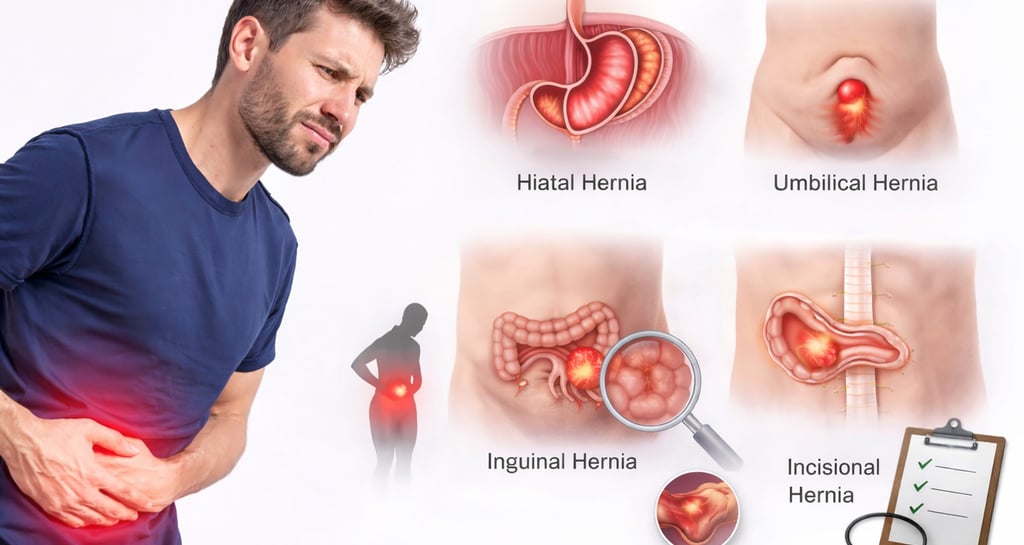
A hernia develops when an internal organ or tissue pushes through a weak point in the muscle or connective tissue that surrounds it. It most commonly develops in the abdominal wall but can also appear in other areas. The following are the different types of hernia that can need hernia repair surgery Abu Dhabi (علاج وجراحة الفتق بالمنظار في أبوظبي):
Inguinal Hernias
Inguinal hernias are the most common type of hernia and are also called groin hernias. They are more common in men and create a bulge as the intestine or fat may protrude through the defect in the abdominal wall.
Ventral Hernias
Umbilical Hernias
Incisional Hernias
Hiatal Hernia
Sports Hernia
A ventral hernia occurs when tissue pushes through a weakened area in the abdominal wall, often at the site of a previous surgical incision. It causes a visible bulge and leads to discomfort, especially with movement or strain.
An umbilical hernia develops near the belly button. It is common in both infants and adults and may become more noticeable with coughing or standing.
An incisional hernia is a common side effect of abdominal surgery. In this, the tissue protrudes through a former incision in your abdominal wall that has weakened over time.
A hiatal hernia occurs when a part of the stomach pushes into the chest cavity. It can lead to symptoms like acid reflux, heartburn, and chest discomfort.
A sports hernia is a soft tissue injury in the groin area, caused by repetitive strain or sudden twisting movements. Unlike traditional hernias, you may not notice a visible bulge, but it can cause persistent pain with activity.
Congenital Hernia
Symptoms of a Hernia
Perineal Hernia
A visible bulge or swelling
Pain or discomfort
Heaviness or pressure in the abdomen
A congenital hernia is present at birth and occurs due to incomplete closure of the abdominal wall during fetal development. It is commonly seen in infants.
A perineal hernia is a rare condition where abdominal or pelvic organs protrude through the pelvic floor muscles into the perineal region. It may cause discomfort, swelling, and difficulty with bowel movements.
Not all hernias cause pain initially, but over time, symptoms can become more noticeable. Common signs to watch for are:
Burning or aching sensation
Digestive Issues
It is the primary sign, mostly occurring in the abdomen or groin area. This lump becomes more visible when standing, coughing, or straining, and goes away when lying down.
You may experience mild to intense pain or general discomfort around the lump. Any physical activity, such as lifting, bending, or prolonged standing, increases the pain.
You may feel heaviness or pressure in the abdomen or groin without intense pain. This stage is before a visible lump appears.
You may experience a burning or aching sensation in the affected site when the protruding tissue is affecting the nearby nerves.
If you have an abdominal hernia, you may experience bloating, indigestion, or constipation.
If the hernia becomes strangulated and cuts off the blood supply, it can turn into a medical emergency. Immediate care and hernia repair surgery Abu Dhabi is required in such cases.
If you notice any symptoms, consult now—timely general surgery can help treat the condition.
Types of Hernia Repair Surgery Abu Dhabi(علاج وجراحة الفتق بالمنظار في أبوظبي)
Open Hernia Repair
Robotic Hernia Surgery
Conclusion
Modern medicine offers multiple approaches to hernia repair, depending on the size, type, and patient's condition. The following are the options for hernia repair surgery Abu Dhabi:
The surgeon makes an incision directly over the hernia defect and repairs it. They put the organs and tissues back into place and stitch them together to strengthen them. Surgeons use surgical mesh in some cases to reinforce the tissue. It is suitable for larger or more complex hernias
Laparoscopic Hernia Repair
During laparoscopy, also known as keyhole surgery, the surgeon makes a few small incisions instead of one large cut. A thin tube with a tiny camera is inserted to display internal images on a monitor, while specialized instruments are used through the other incisions to repair the hernia. This hernia repair surgery Abu Dhabi offers faster recovery and less post-operative pain.
This advanced form of laparoscopic surgery uses robotic-assisted instruments for greater precision. The surgeon controls the system from a console, guiding the technology to repair the weakened tissue causing the hernia.
Hernia repair surgery Abu Dhabi (علاج وجراحة الفتق بالمنظار في أبوظبي) is a safe, routine, and highly effective procedure. With modern surgical techniques available in Abu Dhabi, you can expect faster recovery, minimal discomfort, and excellent results. If you are experiencing symptoms or have been diagnosed with a hernia, consulting a qualified specialist is the first step toward relief. Timely consultation not only prevents complications but also allows early return to your normal activities. Schedule your hernia evaluation at Bone Care One Day Surgery Center in Abu Dhabi today for safe, timely care.
Frequently Asked Questions
Is hernia repair surgery a major procedure?
Hernia repair surgery Abu Dhabi is considered a routine and safe procedure.
How long does hernia surgery take?
The procedure typically takes between 30 minutes and 2 hours, depending on the type and complexity of the hernia.
Is hernia surgery painful?
You may experience mild discomfort after surgery, but pain is managed with medications.
How long is the recovery period?
Recovery depends on the technique used. It takes 1 to 2 weeks after laparoscopic surgery and 3 to 6 weeks after open surgery to recover.

© Copyright 2026 BONE CARE ONE DAY SURGERY - LLC. All Rights Reserved. | DOH License No. MF4555 | Terms & Conditions